
Short answer: you're both a little right
If one of you says "it's just noisy, it's fine" and the other says "something's about to break," the truth is usually in between — but closer to the second one. A grinding or popping garage door is rarely the opener dying. More often it's frayed lift cables or worn rollers quietly wearing out for months before they fail loudly, all at once, usually when it's cold outside.
What's actually making the noise
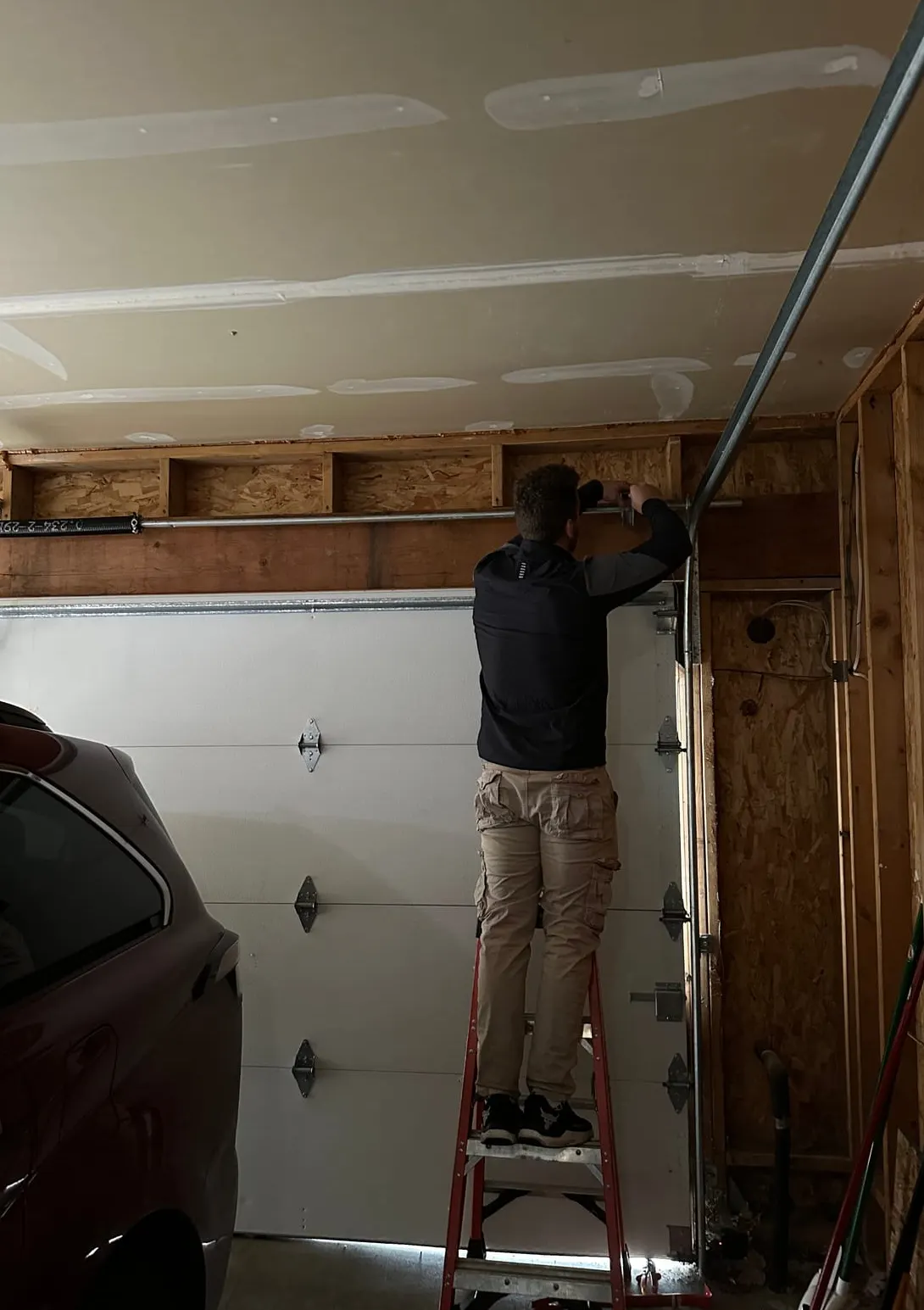
Your garage door doesn't lift itself. Two steel cables, wound around a drum, do the heavy pulling, guided along by rollers riding in a metal track. Both parts are built to last years — but both wear out gradually, which is exactly why one spouse doesn't notice anything until the other one does.
Frayed cables
- Look like tiny broken wires sticking out, almost like a fuzzy wire brush, usually near the bottom bracket or around the drum.
- Caused by age, rust, and repeated flexing — speeded up a lot by road salt and moisture tracked in during icy months.
- Usually silent until they're not. A fraying cable can hold for a long time, then let go suddenly under tension, often during the first hard cold snap of the season when the metal is stiffer and under more load.
Worn rollers
- Make a rhythmic grinding, squeaking, or knocking sound as the door moves — louder on the side where the roller is worst.
- Nylon rollers crack or chip with age; steel rollers lose their bearings and start to wobble in the track.
- Humid Illinois summers swell wood jambs slightly and can nudge tracks out of true alignment, which wears rollers faster than normal.
Here's the part that settles most arguments: a worn roller grinding away is annoying but not urgent by itself. A fraying cable under tension is a different category — it's a spring-loaded, few-hundred-pound door being held up by wire that's losing strength every time it moves.
Why the failure feels sudden even though the wear wasn't
Cables and rollers don't fail at a steady pace. They degrade slowly for months, then cross a threshold — one more cold morning, one more cycle with ice on the track — and the door drops crooked, jams halfway, or comes down hard on one side. That's the loud failure. The quiet part was weeks or months of fraying and grinding that got written off as "just an old door."
Can you just tighten or oil it yourself?
Lubricating noisy rollers with a garage-door-rated silicone spray is a fine DIY step and genuinely helps in winter when cold makes everything stiffer. But do not touch the cables, the drum, or anything near the torsion spring. Those parts are under high tension, and a cable or spring that lets go while someone's hands are on it can cause serious injury. This is the one spot in garage door care where "I'll just take a look" is the wrong call.
When to call Matteson Garage Door
If you're seeing visible fraying on a cable, a roller that's chipped or wobbling, or a door that jerks, drops unevenly, or sounds different than it did a season ago, it's time to get it inspected before winter puts more load on worn parts. We offer Garage Door Maintenance visits that check cables, rollers, track alignment, and spring tension before small wear turns into a stuck or dropped door — and Garage Door Spring Replacement and cable repair when parts are already past the point of adjustment. If a cable has already snapped or the door won't move safely, our Emergency Garage Door Service handles it same-day.
Settle the argument the easy way — get it looked at before the cold snaps make the decision for you. Call Matteson Garage Door, serving Matteson, Richton Park, Olympia Fields, Park Forest, Frankfort, Tinley Park, Country Club Hills, and Homewood, IL.