
The Quick Answer
Most noisy garage door openers can be quieted a lot — sometimes completely — with an hour of lubrication, tightening, and a few rubber isolation pads, no new parts required. If you've done all that and the opener still rattles the house every time it runs, the real fix is swapping a chain-drive unit for a belt-drive opener, which replaces metal-on-metal noise with a quiet rubber belt. Here's the order to try things, from cheapest to most involved.
Why Garage Door Openers Get Loud Around Matteson
The big seasonal swings in this part of Illinois are hard on garage door hardware. Cold winters bring ice, slush, and road salt that gets tracked onto the garage floor and kicked up onto tracks and rollers, where it dries into a gritty residue that squeaks and grinds. The same cold also makes steel contract, which can loosen bolts on the opener rail and mounting brackets just enough to create rattle. Come summer, humidity swells wood trim and can shift door panels slightly, adding friction points that weren't there back in winter. None of this means anything is badly wrong — it just means the fixes below are seasonal maintenance, not a one-time job.
Tools You'll Need
- Step ladder tall enough to reach the opener rail and top roller safely
- Socket set and adjustable wrench
- Garage door lubricant (silicone or lithium-based spray; avoid WD-40 as a long-term lubricant, since it attracts dust)
- Rags
- Rubber isolator pads or washers for the opener mount (available at hardware stores)
- Work gloves
- Flashlight
Step-by-Step: From Cheap Fixes to a Belt-Drive Swap
What a Homeowner Can Safely Do
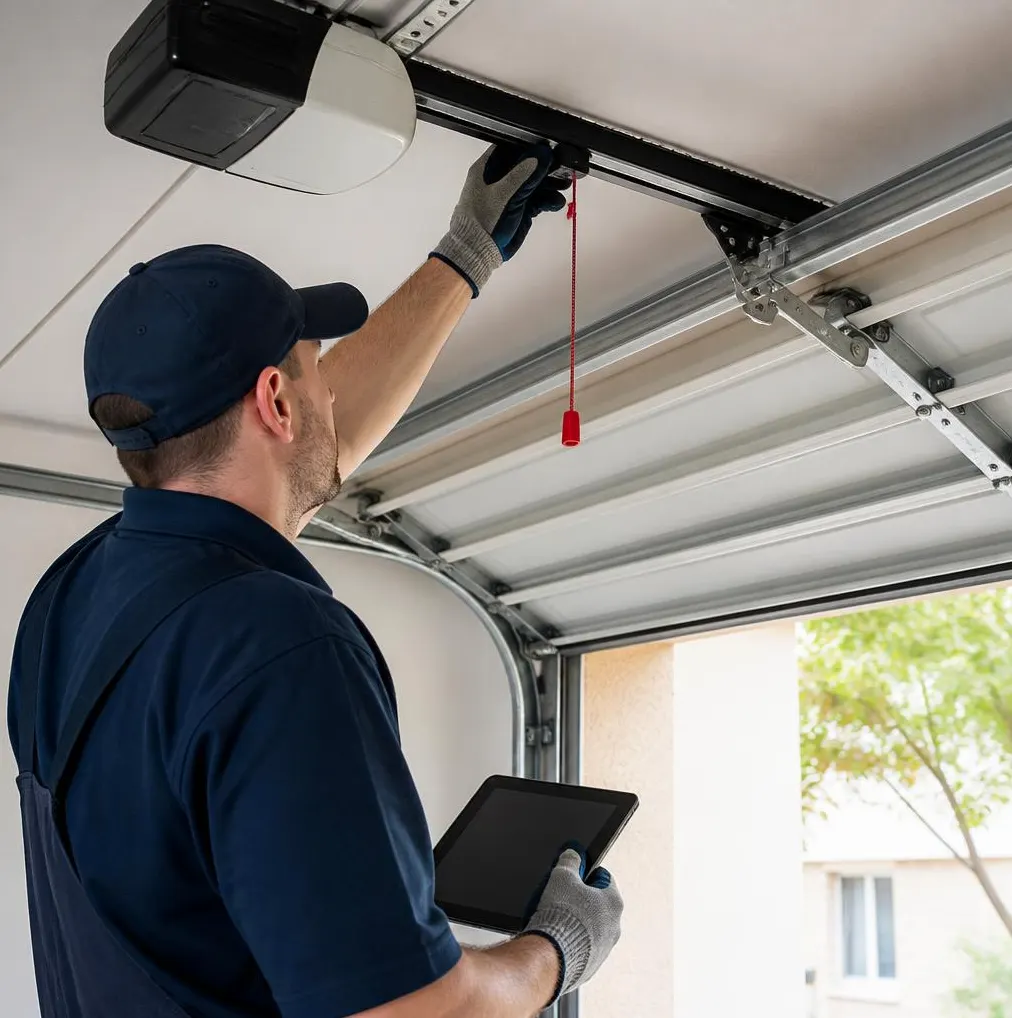
- Unplug the opener before touching anything, and pull the emergency release so the door won't move unexpectedly while you work.
- Tighten every bolt you can reach — the mounting bracket, the rail where it meets the motor head, and the bolts holding the track to the wall. A loose bracket is one of the most common sources of rattle, and it's worth checking after a cold snap, since freezing temperatures can loosen hardware slightly.
- Lubricate the moving parts: rollers, hinges, the opener's drive chain or screw, and springs. Wipe off old grease and grit first, then apply a light coat. Do this once each spring and once each fall, since road salt and summer dust both build up residue over a season.
- Check and replace worn rollers. Plastic rollers wear out and get noisy with age; nylon rollers with sealed bearings run quieter and hold up well through winter freeze-thaw cycles.
- Add rubber isolators between the opener and the ceiling bracket. This one change stops a lot of the vibration that travels through the house — worth doing if your garage sits under or next to a bedroom.
- Check chain or belt tension. A chain that sags will slap the rail with every open and close. Most openers have a tensioning nut on the rail; follow the manufacturer's spec, since over-tightening causes its own wear.
These steps cover the majority of noise complaints and cost very little beyond a bottle of lubricant and an afternoon.
What Needs a Technician
- Replacing worn springs. Springs under tension can cause a loud bang or pop when they wear out, and they're dangerous to handle without the right bars and training — this is not a DIY repair.
- Diagnosing a failing motor or gear assembly. Grinding or whining that doesn't go away with lubrication often means internal gears are worn, which usually points toward opener replacement rather than repair.
- Swapping chain-drive for belt-drive. This involves removing the old rail and trolley assembly, installing a new belt-drive rail, and reprogramming remotes and keypads. It's generally a half-day job for a trained technician and the single biggest noise reduction available short of replacing the entire door system.
- Realigning a door that's binding on the track. If the noise is coming from the door itself scraping rather than the opener, track alignment needs a professional eye — forcing it yourself can bend the track further.
Belt-Drive vs. Chain-Drive: Is the Swap Worth It?
Chain-drive openers are durable and inexpensive but inherently noisy — metal chain links running over a sprocket will always make some sound. Belt-drive openers use a rubber or fiberglass-reinforced belt instead, which runs nearly silent and holds up fine through hot, humid summers and cold winters alike. The trade-off is upfront cost: belt-drive units typically run a few hundred dollars more than a comparable chain-drive model (national ranges, not local pricing). For an attached garage under or next to living space — common in a lot of homes in this area — many homeowners decide the quiet is worth it the first time a late-night garage run doesn't wake the whole house.
When to Call Matteson Garage Door
If you've tightened hardware, lubricated everything, and the opener still grinds, bangs, or whines — or if the noise is coming from a spring or the door itself rather than the opener — it's time to call a technician rather than keep troubleshooting. Matteson Garage Door's Garage Door Opener Repair & Installation service covers everything from diagnosing a failing motor to a full belt-drive upgrade with new remotes and keypad programming. If the noise turns out to be worn rollers, loose hardware, or track misalignment, our Garage Door Maintenance visits catch those issues before they turn into an emergency call during an ice storm or spring tornado watch, when a garage door failure is the last thing you want to deal with.
If your garage door opener has been driving you up the wall, give Matteson Garage Door a call. We serve Matteson, Richton Park, Olympia Fields, Park Forest, Frankfort, Tinley Park, Country Club Hills, and Homewood, and we'll get it fixed quietly and fairly — no surprises on the bill.